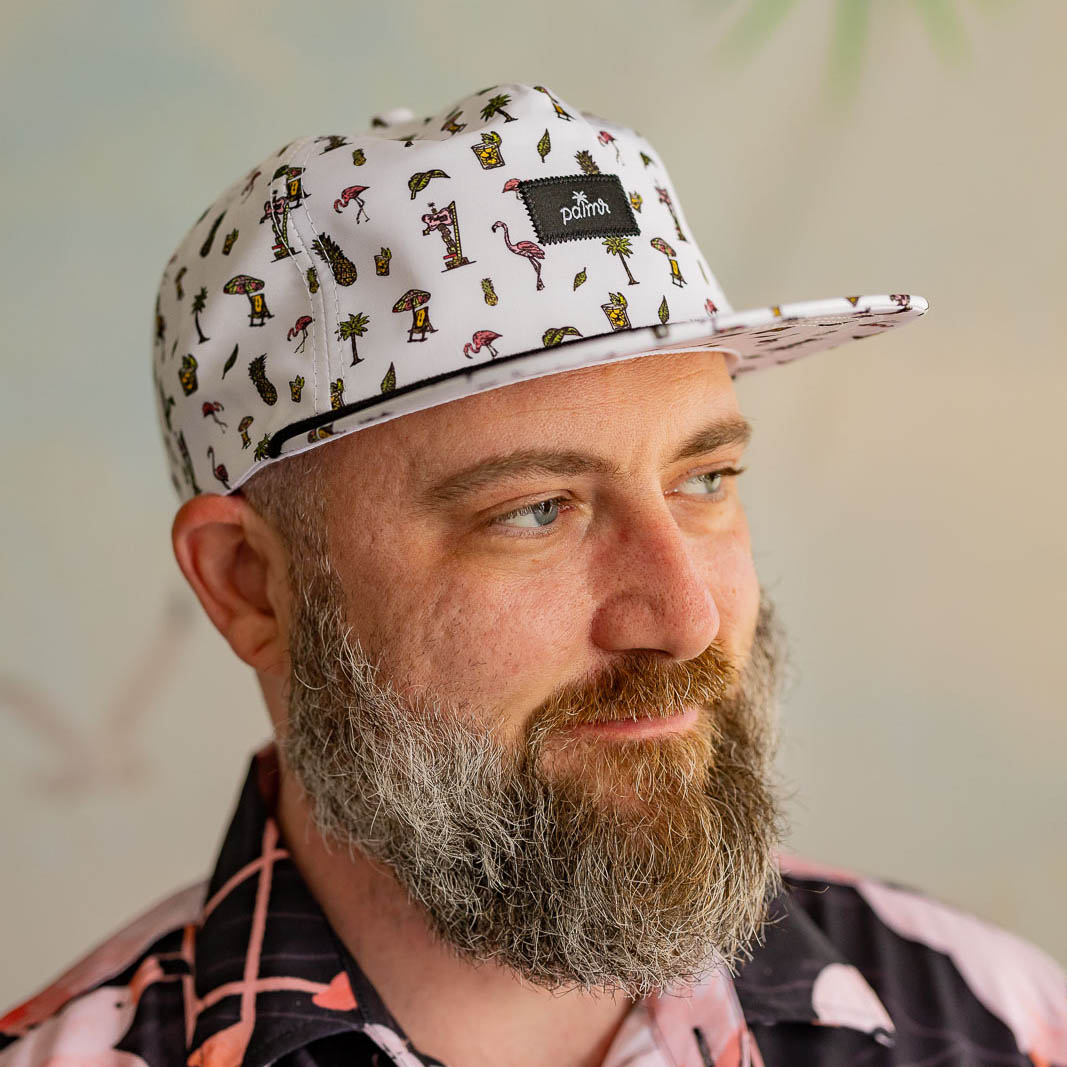
I was at a PGA golf tournament this past weekend and saw about 25 strangers wearing product from my clothing brand, Palmr. People I had never met in my life, just out there living their day. I stood there for a moment and just took it in. It was one of those surreal moments that reminds you exactly why you started and why every hard day was worth it.
I say that not to brag, but because I want you to understand where that moment came from. It came after two years of grinding, questioning, and figuring things out the hard way. Two years of running a clothing brand that my wife Rebecca and I started together, while simultaneously running Threadbird, the full-service merchandising agency I co-founded over 18 years ago that has helped thousands of clothing brands bring their products to life.
The difference is, at Threadbird I was always on the other side of the table. I knew manufacturing inside and out. I knew product. What I didn’t fully appreciate until I was in the trenches myself was everything else that goes into actually building a brand from scratch.
So whether you’re just starting out or you’ve been at this for a while and you’re starting to wonder if it’s ever going to click, I wrote this for you. These are the things I either wish I knew sooner or was honestly just too stubborn to admit how important they actually were.
Patience Is the One Thing You Can’t Buy
The number one reason clothing brands fail is not bad product, bad design, or bad marketing. It’s impatience. People quit before the work they’ve already put in has had a chance to pay off.
I get why it happens. This is an expensive business to do right. Inventory costs money. Good blanks cost money. Photography, your website, marketing, all of it adds up fast. And when you’re spending real money every month and not seeing it come back yet, panic sets in.
But here’s the reality: if you have a solid product, you understand your margins, and you’re actually running this like a business, you can be successful. The math works. It just doesn’t work on the timeline you had in your head when you started. The brands that make it are not always the ones with the best product or the biggest budget. They’re the ones who stayed in long enough for the snowball to start rolling.
People Don’t Buy Clothes Because They’re Cool
This is one of the most important things I can tell you, and most people learn it the hard way.
Customers don’t buy a shirt because it looks good. They buy because it means something to them. It represents who they are, what they believe in, or how they want to be seen. It gives them a feeling. It solves a real problem they have.
That’s why going too broad is one of the most common and costly mistakes I see new brands make. When you try to make something for everyone, you end up making something that doesn’t truly connect with anyone. Your messaging gets watered down. Your designs become generic. And you end up competing on price with a thousand other brands selling basically the same thing.
The brands that build real communities go narrow on purpose. They pick a specific person, a specific feeling, a specific identity, and they own it completely. Gymshark didn’t try to sell workout clothes to everyone who exercises. They went deep on a specific type of fitness culture and built something that community could claim as their own. Patagonia isn’t just selling outdoor gear. They’re selling a set of values that a specific kind of person holds.
You don’t need to be Gymshark or Patagonia. You just need to be crystal clear about who you’re for and what your brand represents to them. When you get that right, you stop chasing customers and they start finding you.
Find Your Hero Product and Build Around It
This one I learned by doing it wrong first.
When I started Palmr, I launched with a full collection. I thought more options meant more chances to make a sale. What it actually meant was more inventory to manage, more money tied up, more designs to market, and no clear story to tell. I was spreading everything thin.
A hero product is the one item that defines what your brand is about. It’s the thing someone buys first, loves, and tells other people about. It’s what your brand gets known for before it gets known for anything else. And here’s the thing: you usually can’t just decide what it’s going to be upfront. It reveals itself through customer feedback, through what actually sells, and through what people respond to.
Once you find it, everything changes. Your marketing becomes focused. Your story becomes clear. And new customers have an obvious starting point instead of staring at a full collection trying to figure out where to begin.
If you’re early on, resist the urge to keep adding products. Do fewer things better. Get one item absolutely right, build your reputation around it, and let that pull everything else forward.
You Have to Treat This Like a Real Job, Including the Learning
A lot of people underestimate what running a clothing brand actually requires. It’s not just designing products and posting on Instagram. It’s product development, supplier relationships, inventory management, e-commerce, photography, copywriting, email marketing, customer service, data analysis, and that’s before you even get to paid advertising.
To do this right you have to become a student of all of it. That means spending serious time every single week learning, not just working. Reading, watching, testing, and getting better at every part of the business. The people who win in this space are obsessed with figuring it out, not just grinding through orders.
But there’s another side to this that doesn’t get talked about enough. You have to protect the time you spend on learning and growing your brand. Too many owners get completely buried packing boxes and shipping orders. That stuff has to get done, but if it’s eating all of your time, your brand is standing still. The fulfillment side of the business keeps the lights on. The marketing, content, and brand-building side is what actually grows it. You need both, and you have to be intentional about making time for the part that moves the needle.
Social Proof Is the Foundation, Not a Nice-to-Have
Nobody is going to trust you out of the gate. That’s just the reality of selling clothes online to people who have never heard of you. They can’t touch the fabric. They can’t see how it fits in person. And they’ve been burned before, probably more than once.
Think about the landscape they’re shopping in. There are thousands of clothing brands out there, many of them running print on demand through cheap blanks and questionable quality control. A customer orders something, it shows up looking nothing like the photo, the fabric feels like sandpaper, and it shrinks after one wash. That experience sticks. And now they’re looking at your brand, which they’ve never heard of, and they’re skeptical. They have every right to be.
Social proof is how you close that gap. Reviews, photos of real customers wearing your product, authentic content that shows what the product actually looks like on a real person. That’s what converts a skeptic into a first-time buyer.
One of the best things we’ve done at Palmr is offer gift cards in exchange for reviews and customer photos. Here’s why it works so well: the gift card pays for itself almost every time. Most customers who receive one come back and spend it, and they usually spend more than the gift card is worth. So you’re not just getting social proof, you’re also generating a repeat purchase. It’s one of the highest-return things you can do, and it’s not complicated to set up.
I wish I had prioritized this from day one. I was focused on getting new customers instead of activating the ones I already had. The customers who already bought from you and liked the experience are your most valuable marketing asset. Use them.
Quality Is Non-Negotiable
This seems obvious but I see brands cut corners on it constantly, usually because they’re trying to protect their margins or they haven’t figured out the right suppliers yet.
Here’s the math that matters: it costs real money and real effort to get someone to buy from you for the first time. If they get their order and they’re disappointed, that money and effort is gone. They’re never coming back. But if they’re genuinely impressed, they become something more valuable than a customer. They become a sales rep. They post about it, they tell their friends, they tag you. Some of our biggest growth has come entirely from what our customers did, with zero spend on our end.
That only happens when the product earns it. Get your quality right. Pay attention to the details. Make sure the finished product is something you’re genuinely proud of. There are no shortcuts on this one.
Your Website Is Making or Breaking Your Sales
A lot of brand owners put enormous effort into their product and almost no effort into the experience of buying it online. That’s a problem, because for most customers, your website is your brand. It’s the first thing they judge you on.
If your site looks like it was thrown together quickly, people are going to assume the same about your product. If your product pages are thin on detail, your photos are inconsistent, and there are no reviews to read, you’re asking someone to take a leap of faith on a brand they’ve never heard of. Most won’t.
At the end of last year I made a real commitment to improving three things at Palmr: the overall design and professionalism of the site, the quality and depth of the product pages, and the amount of social proof visible throughout the shopping experience. None of it happened overnight, but the results have been some of the most tangible I’ve seen in two years of running the brand.
Here’s what the conversion rate has looked like:
- 2024 (Year 1): 0.62%
- 2025: 0.84%
- January 2026: 1.05%
- February 2026: 1.23%
- March 2026 (so far): 2.49%
I’m sharing the early numbers because I think it’s important to be honest about where we started. Those numbers are bad. Most brands I talk to don’t even know what their conversion rate is, which is its own problem. If you’re not tracking your data, you’re making decisions blind. You need to know your numbers, all of them, and review them regularly.
The way I think about growth right now is pretty simple. Our goal is 15% month over month. And I don’t think about it as one big number to chase. I break it down into smaller questions: Can I get a few more people to add one extra item to their order? Can I get a few more people who were on the fence to say yes? Can I get a few more past customers to come back and buy again? When you think about it that way, it stops being overwhelming and starts being a set of specific problems you can actually solve.
Ads Are Fuel, Not a Fix
This is probably the most misunderstood thing in the clothing brand space, and it costs people a lot of money.
Ads are not a solution to a brand that isn’t working. They are an accelerant for a brand that is. The difference matters enormously.
Think about it this way. If your conversion rate is below 1%, your product pages are weak, you have little to no social proof, and your offer isn’t compelling, running ads to that experience is not going to fix any of those problems. It’s going to send more people into a funnel that doesn’t convert, and you’re going to spend money doing it. Ads don’t hide your weaknesses. They put them on a bigger screen.
The engine has to be built first. You need a product people genuinely love. You need pages that clearly communicate what you’re selling and why it’s worth buying. You need social proof that removes the skepticism. You need an offer that gives someone a real reason to act. Once all of that is in place, ads become exactly what they’re supposed to be: a way to get more of the right people into something that already works. That’s when they pay off. That’s when your cost per acquisition makes sense and your return on ad spend starts to look good.
Build the engine first. Then add the fuel.
Keep Going. You’re Closer Than You Think.
I want to come back to where I started. That moment at the golf tournament, seeing 25 strangers in our product, that didn’t happen because everything went smoothly. It happened because we stayed in it when it wasn’t smooth.
The first two years of Palmr felt like an uphill battle most of the time. I have 20 years of manufacturing experience and I still found myself learning hard lessons. The difference between where we were at the start of 2024 and where we are right now is not some sudden breakthrough. It’s the compounding result of getting a little bit better at a lot of things over a long period of time.
The snowball effect is real. The longer you stay in it, the more it builds. Customer trust builds. Your brand recognition builds. Your data gets richer and your decisions get smarter. Doors open that were not open before, simply because you’ve been around long enough and done enough good work for people to take you seriously.
I’ve seen this play out over 18 years with the brands we’ve worked with at Threadbird, and I’m watching it happen now with Palmr. The hard times are not a sign you’re doing it wrong. They’re usually a sign you’re doing something that actually matters.
Stay in it. Do the work. Get a little better every week. That’s the whole game.
Need a Merchandising Partner Who Takes Your Brand Seriously?
At Threadbird, we’ve spent over 18 years helping clothing brands get their product right, from sourcing quality blanks and nailing the decoration to full-service fulfillment. If you’re ready to stop guessing and start building something that lasts, we’d love to be part of it.
Learn more at threadbird.com.